


BLOG |
Adoption stories
An interview with BitMaker about those little devices you keep seeing on Bitcoiners’ desks: NerdMiner, BitAxe, NerdAxe, and the ones to come.
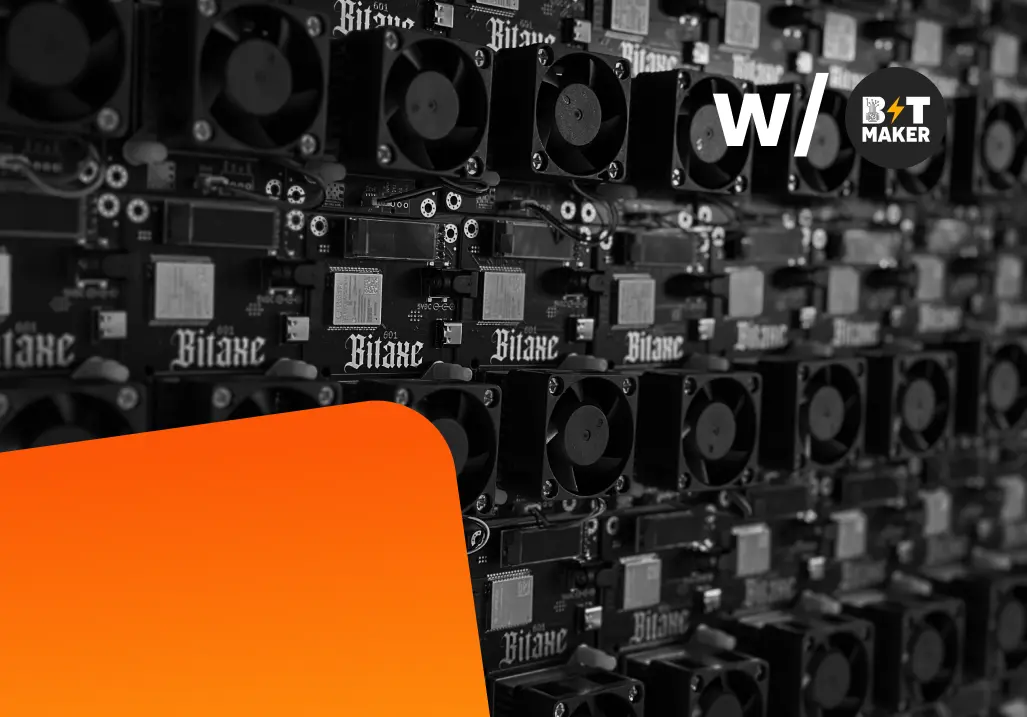


A legend in the Open Source Mining movement, BitMaker was one of the creators of the NerdMiner. Among the first Bitcoin lottery miners, this device sparked a fire that’s still burning. Not too long ago, Bitcoin mining required high investments, and most of the equipment came from two Chinese companies. Nowadays, the market is shifting. While the majority of Bitcoin mining is still industrial, an alternative is brewing.
We met BitMaker, a Spaniard, at the Accelerating Bitcoin conference in Asunción, Paraguay. The following conversation was in Spanish. We talked about the current state of the movement: the NerdMiner, the BitAxe, Open Source Miners United, the 256 Foundation, the NerdAxe, and the Bitronics store. Sprinkled with BitMaker’s stories and memories, it makes for an entertaining and informative interview.
When the mad scientist joined the Bitcoin movement, his main objective was “to bring Bitcoin to the world of electronics and thus be able to give people a little more knowledge about Bitcoin, but from the electronics side.” Little did BitMaker know that his first steps would create gigantic waves that are still reverberating all around us. About his humble beginning, BitMaker told us:
“I created a YouTube channel where I intended to share that knowledge, learning by building. Basically, working on small projects and thus learning more about Bitcoin step by step. And I stumbled upon one project that I developed called the NerdMiner. It’s basically a desktop miner that you could set up at home.The NerdMiner uses a tool called ESP32 that is very common in the world of electronics. The project was coined by a group of people in the community, and they started building it. It was a revolution at the time. In less than a month, more than 6,000 people set up NerdMiners at home, a mining pool that accepted NerdMiners opened, and a community began to form around the project.”
At this stage, the NerdMiner was a didactic toy. While theoretically the device could find a block, the possibilities were so tiny that the GitHub’s ReadMe made clear: “The main aim of this project is to let you learn more about minery and to have a beautiful piece of hardware in your desktop.” So far, no NerdMiner has found a block. The device, however, showed there was a market for these kinds of projects. That fact sparked another BitMaker adventure:
“Since there was demand and a lot of customers, I decided to start another venture: Bitronics, a store where I sell these types of open-source projects and also encourage the creation of new ones. For example, after creating NerdMiner and starting Bitronics, a project called BitAxe appeared. It was the catalyst for a revolution. We started selling BitAxes, and began creating new projects linked to NerdMiner and BitAxe, such as the NerdAxe, which is a mixture of both projects.”
A few very lucky miners have found blocks with different models of the BitAxe, proving the dream is real. Solo miners can find gold.
On the Open Source Miners United website’s About Us, the organization’s reason-to-be explains why the world needs this movement to thrive:
“Despite Bitcoin being fundamentally open source since the beginning, Bitcoin mining has become tragically closed source and proprietary over the last decade. Being decentralized and permissionless are key traits of Bitcoin that allow it to be freedom money for the whole world… Open Source development is what ensures Bitcoin remains this way, forever.”
Our guest, BitMaker, shared with Blink how Open Source Miners United came to be:
“Within the revolution that has taken place in the BitAxe universe, a community of miners that promotes open source and makes everything we develop public was created. The intention is that anyone can reproduce the projects in their country, to encourage mining decentralization. Anyone can join the Discord; there are weekly talks, there is a lot of information, there are quite a few people developing and improving their projects and implementing new solutions. I think the future is promising. We are seeing more and more open-source miners, more companies promoting it.There is this liberation of knowledge, some companies are allowing the use of their mining chips to make these types of miners at home, and I think that will help to decentralize mining in a way that has not existed until now.”
The pieces are slowly falling into place, but finding the chips for these open-source mining devices is still the harder part of the process.
So far, the whole revolution had been powered by the same thing the open source mining movement is fighting: industrial miners. There are only a few chip factories in the world, and Bitcoin miners are not their priority. Buying chips is a bottleneck even for established factories that buy in bulk.
Little open source shops work with easily available material, because that’s the point. Everyone in the world should be able to build the projects in their garage. Chips, however, those had to be extracted from industrial mining machines. Luckily for the world, the situation is changing. BitMaker explains:
“Until now, it was impossible to get the chips unless you bought a machine and extracted the chips from inside, which is what we have been doing all this time. Now, there is more openness in this regard. For example, Block created a new miner very recently and announced a donation of a certain amount of chips for the 256 Foundation- a foundation in the US that is also linked to the BitAxe project and the OSMO community. It also allows third parties to obtain these chips to develop open source projects.”
A great ally to the open source mining movement, Jack Dorsey’s Block is developing its own chips. They’re not on the market yet, but once they arrive, the open source revolution will get a new boost. Where will it get to this time around?
It’s easy to be impatient, but the open source Bitcoin mining movement is in its infancy. The future looks bright in BitMaker’s eyes:
“In two years we have achieved great things. We used to have to get the chips directly from machines, but now you can find them on the market and from a good supplier. This is a pretty important part. We will see much more powerful miners at home.The movement promotes bringing more hash power into homes, creating miners that are like a PC tower. You can have that type of miner in your home, as may have been Satoshi Nakamoto's intention from the beginning. The community is large, with many ideas from all over the world, anyone can contribute.”
As the hashing capabilities of these homemade mining machines increase, the impact of the open source Bitcoin mining movement will become undeniable. So far, it’s easy to ignore. Both industry giants and naysayers inside Bitcoin laugh at the possibility of these little miners competing with warehouses full of VC-backed hashpower. However, things change.
The BitAxes and NerdAxes of the world have already affected mining pools. This aspect clearly shows something is brewing, even if the total hashrate of the open source movement is not impressive yet. BitMaker explains:
“We can even see this in the pools. If you look closely, the BitAxe movement has also promoted the easy creation of mining pools; whether they be public pools or pools where you can run your own node and your own mining pool with just one click. This has also created a trend in the mempool. If you look at which companies mine blocks, a year and a half ago two large companies - Foundry and Antpool - had more than 50%. And if you look now, there is a fairly significant percentage of pools that emerged around the world thanks to the open source movement.”
The open source Bitcoin mining movement is crucial to mining decentralization, but it’s not the only ingredient. While BitAxes and NerdAxes can afford to solo mine and can risk to lottery mine, industrial miners have to join mining pools to survive. These few pools create most of the blocks, so they’re a huge centralizing force that has too much power over the Bitcoin network. Decentralizing block creation should be a priority for Bitcoiners worldwide, but that’s a topic for another occasion.
As one of the few open source creators producing content in Spanish, BitMaker is spreading the news in another market altogether. That alone makes him an incredibly valuable piece in the checkerboard. Be sure to check him out if you understand the language:
“You can find me through the BitMaker channel, you can search for it on YouTube, or you can also find me on X. And if you want to follow all the knowledge and expertise we are building, Bitronics. The store has a website where you can see the articles we write, as well as a knowledge base where we add quality content every month.”
The open source mining movement advances at a pace that’s hard to keep track of. Following BitMaker is a life hack in that regard. If you do, let him know Blink sent you.
Start receiving and sending bitcoin now


