




Have you heard about Bitcoin’s infamous “value overflow incident”? What about Lazlo’s pizza? Did you know about Atomic Swaps in the Lightning Network? Explore these and other fun facts in the following text.
Lighten up and brighten your day with these quick hits. Thirteen fun facts about our favorite topics: Bitcoin and the Lightning Network, written by the coolest community of Bitcoin creators in existence. We put our collective mind to the test, and what you’re about to read is the result… but enough about us.
Bitcoin isn’t just digital money — it’s a world of innovation, speed, and even space adventures!
Here are thirteen incredible fun facts that show just how fascinating the asset and its Lightning Network can be. Bitcoin never stops surprising. Just when you think you’ve seen it all, another story pops up that makes you go, wait, really?
However, when we talk about Bitcoin, the headlines are usually about the price—that enormous number that swings up and down. Let’s disconnect from that and enter the curious world of fun facts, starting with:
The world’s greatest form of money is an economic phenomenon, a technology, and a social tool for change. Those characteristics make it complex, interesting, and full of surprises. Let’s explore a few:
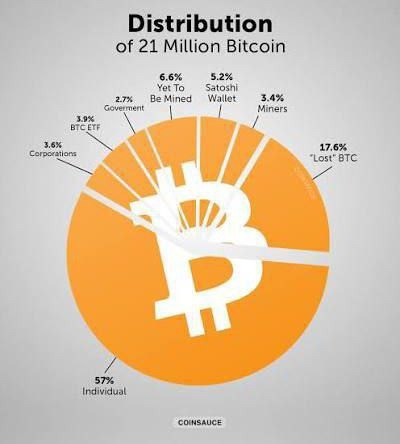
Bitcoin's total supply is capped at 21 million coins, and as of late 2025, approximately 19.91 million have already been mined, leaving around 1.1 million still to be mined. These are some of the biggest known owners of those almost 20 million coins:
The pseudonymous creator of Bitcoin, Satoshi Nakamoto, is believed to own between 750,000 and 1.1 million BTC. These coins have remained untouched since they were mined, making Satoshi one of the wealthiest individuals in the world on paper.
MicroStrategy, led by Michael Saylor, holds approximately 640,000 BTC, making it the largest corporate holder of Bitcoin.
Tesla owns around 11,509 BTC, valued at about $1.3 billion as of Q3 2025.
Everyday users, undisclosed private companies, and groups of people own a substantial portion of Bitcoin. This decentralized distribution is a fundamental aspect of Bitcoin's design, ensuring that it remains accessible to everyone.
Unlike traditional banks that close on weekends or holidays, Bitcoin never sleeps.
You can send or receive Bitcoin anytime, anywhere in the world, even at 3 AM while sipping coffee! It’s peer-to-peer money, free from borders and middlemen.
Yes, Bitcoin isn’t just global — it’s interplanetary! In 2019, Blockstream launched satellites that beam the Bitcoin blockchain from space. This means people can send and receive Bitcoin even without internet access — by connecting to satellite signals.
So technically, Bitcoin has already left Earth and could one day power payments on the Moon!
In El Salvador, there’s a Bitcoin mining operation powered by volcanoes! The country uses geothermal energy from deep underground to run mining machines. The operation is called Volcano Energy, and it turns Earth’s natural heat into digital money.
Poetic, right? Fire from the planet, fueling the future.
According to numbers published by Reuters in May 2024, the volcano had mined 474 bitcoins since 2021.

It’s estimated that over 4 million Bitcoins are lost forever in forgotten wallets, old hard drives, or misplaced private keys! That’s about 20% of all Bitcoin that will never be recovered, making the remaining ones even more valuable. Every lost Bitcoin is a silent reminder to keep your wallet safe and your recovery phrase backed up securely.
Back in 2010, a guy named Laszlo Hanyecz bought two pizzas for 10,000 BTC, the very first real-world Bitcoin purchase ever! Today, that 10,000 BTC would be worth over $600 million.
Every May 22nd, the Bitcoin community celebrates Bitcoin Pizza Day, remembering how far we’ve come from a couple of pizzas to a global financial revolution. Fun thought: That 10,000 BTC could buy over 20 million pizzas today, enough to feed a small country
On August 15, 2010, someone exploited a critical bug in Bitcoin’s early code. The "Value Overflow Incident" allowed the creation of approximately 184.4 billion BTC, far exceeding Bitcoin’s intended 21 million supply cap. Here’s a detailed breakdown of the event:
The bug stemmed from a flaw in how Bitcoin’s original code, written by Satoshi Nakamoto, handled transaction output calculations. Specifically, it involved a signed integer overflow in the C++ code used to sum transaction outputs. In Bitcoin, every transaction must balance inputs (the amount spent) and outputs (the amount sent plus change). However, the code failed to properly check for overflows when summing large numbers.
No one knows if it was an attacker or an accidental exploit. In block 74638, someone crafted a transaction with two outputs: one for 9,223,372,036,854.775807 BTC and another for the same amount, totaling roughly 184.4 billion BTC. This was possible because the sum of these outputs caused an integer overflow, making the total appear valid (close to zero or a small number) to the software, even though it was astronomically large. The transaction bypassed validation, and the block was added to the blockchain.
The issue was quickly noticed by Bitcoin developers and community members monitoring the blockchain. The anomalous transaction stood out because it created an absurd amount of Bitcoin, far exceeding the total supply mined at the time (around 3.7 million BTC). Jeff Garzik, a key Bitcoin developer, posted about it on the BitcoinTalk forum within hours, sharing a screenshot of the blockchain explorer showing the massive output values.
Satoshi Nakamoto and other developers acted swiftly. Within about five hours, they:
1. Identified the Bug: The flaw was traced to the CheckBlock function, which didn’t properly handle large integer sums, allowing the overflow to go unchecked.
2. Patched the Code: They released a software update (Bitcoin version 0.3.10), adding stricter validation to prevent such overflows. The patch ensured that output sums were correctly validated and capped within reasonable limits.
3. Forked the Blockchain: To erase the invalid block, the developers encouraged miners to adopt the patched software and mine a new chain starting before block 74638. Because the majority of miners quickly upgraded, the corrected chain became longer and was accepted as the valid blockchain, effectively orphaning the block with the 184.4 billion BTC. This was possible because Bitcoin’s network was still small, with fewer nodes and miners than today.
- The Excess Coins: The 184.4 billion BTC never entered circulation because the block was invalidated. No one profited, and the exploit didn’t affect Bitcoin’s actual supply.
- Impact on Bitcoin: The incident highlighted Bitcoin’s vulnerability in its early days but also demonstrated the community’s ability to respond rapidly. It was a pivotal moment that underscored the importance of rigorous code auditing.
- Historical Context: At the time, Bitcoin was worth less than $0.10 per BTC, so the financial impact was negligible compared to today’s values. However, the bug exposed a critical risk to Bitcoin’s core promise of a fixed supply.
- Who Did It? The identity of the person behind the transaction remains unknown. Some speculate it was an accidental exploit by a curious user, while others believe it was a deliberate test of Bitcoin’s security. There’s no evidence it was malicious, as no attempt was made to spend the created coins.
We could argue that the Lightning Network saved Bitcoin. It transformed it from a store of value to a medium of exchange, effectively making it money by the formal definition. What do you know about this set of interconnected channels that send BTC at the speed of light? Let’s explore some fun facts and tidbits:
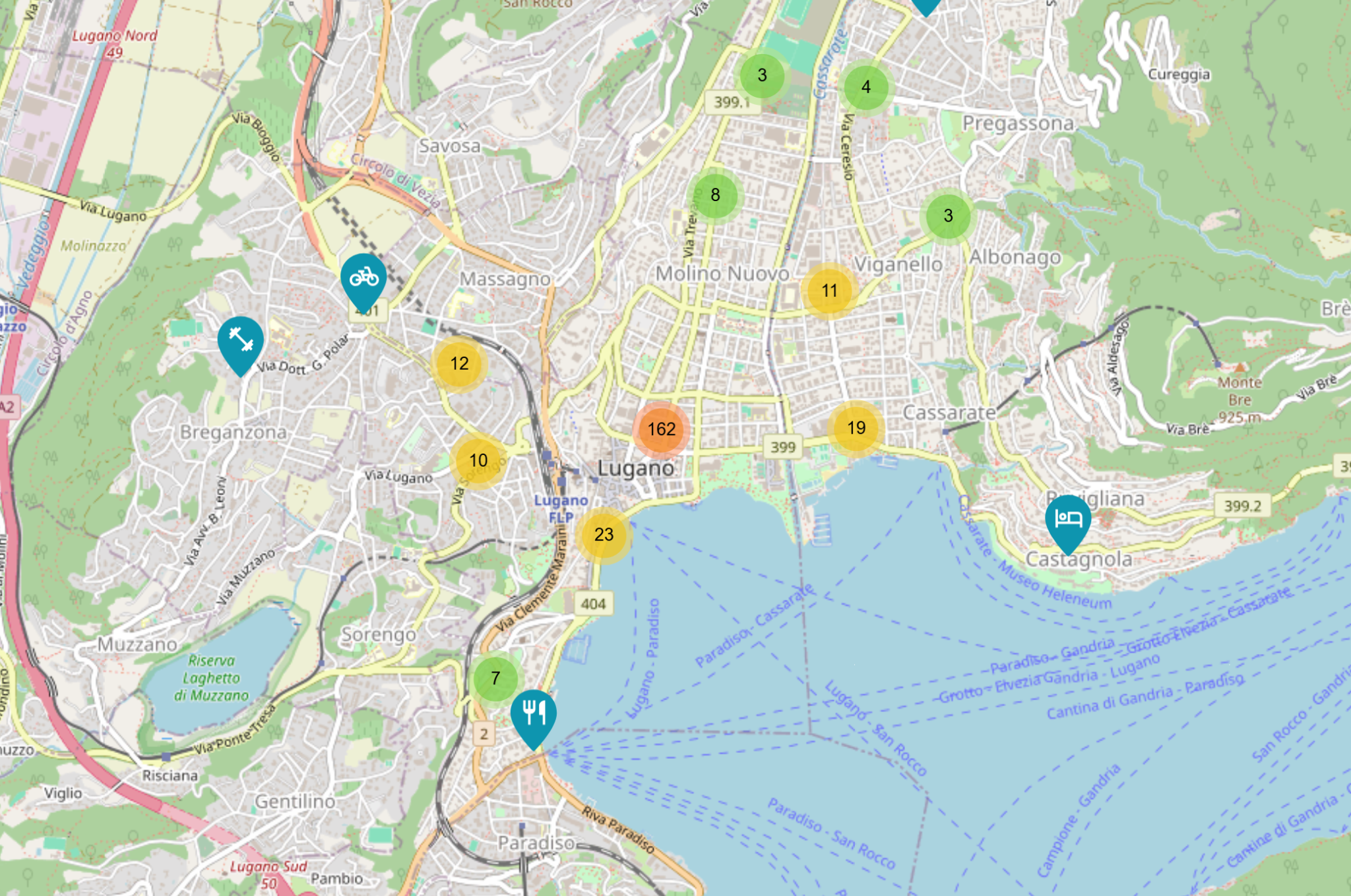
The answer is Lugano, Switzerland, which stands out as a global leader in integrating the Lightning Network into everyday commerce. Thanks to the ambitious Plan ₿ initiative, Lugano has transformed into a bitcoin-friendly city where residents and visitors can pay with Bitcoin Lightning at numerous businesses.
In Lugano, you can use the Lightning Network to pay for:
> Hamburgers at fast food restaurants
> Coffee at a local café
> Groceries at participating stores
> Art at galleries
> Services like haircuts or optician visits.
Lugano's embrace of the Lightning Network showcases how a city can integrate cryptocurrency into daily life, making digital payments as seamless as using a bank card.
Did you know Bitcoin can move faster than your eyes can blink? The Lightning Network offers the fastest way to send value anywhere on Earth. While a regular Bitcoin transaction might take about 10 minutes, Lightning payments flash through channels instantly — quicker than a human blink (around 300 milliseconds)!
And the fees? Almost zero. Whether it’s buying coffee or tipping your favorite creator online, Lightning makes Bitcoin fast, easy, and unstoppable
With the Lightning Network, artists can earn Bitcoin in real time as fans stream their songs on apps like Fountain.fm and Wavlake. Every second of listening sends a few sats straight to the artist’s wallet. No labels, no waiting. Just instant, fair payment.
If you’re still thinking Bitcoin is just for internet speculators, look to South Africa. The country is hosting one of the most successful retail adoption stories globally, thanks entirely to the Lightning Network (LN) and local off-ramps and payment companies like Money Badger.
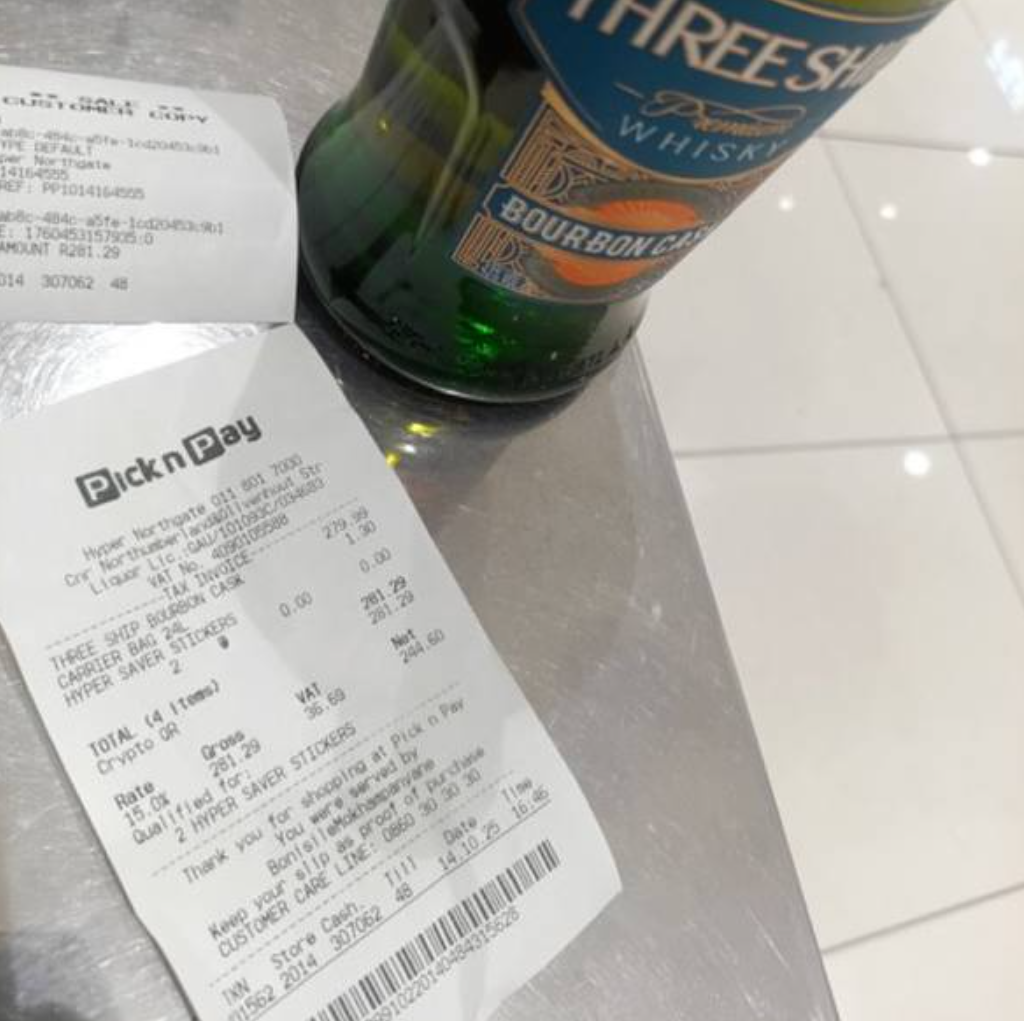
An estimated 650,000 South African merchants—that’s roughly 40% of the nation’s small-to-medium businesses—can now accept payments via Lightning. This isn't a mere pilot; it’s a national shift. In South Africa, you can instantly use Bitcoin to buy coffee, airtime, fuel, and even groceries from the retail giant Pick n Pay.
This proves that Lightning tech is solving a real-world payment problem better than traditional banks for local commerce.
Lightning allows micropayments of even fractions of a cent! This opens up new possibilities, like pay-per-article reading, streaming tips, or micro-donations. All without the credit cards’ crazy fees.
Bitcoin + Lightning = the future of instant, borderless money.
An atomic swap lets users exchange BTC from the main chain directly to the Lightning Network, without trusting a third party. “Atomic” means the swap either happens completely or not at all, so no one can lose funds if the other party backs out.
On the Lightning Network, it works like this:
1. The funds get locked using smart contracts.
2. The smart contracts are hash time-locked contracts (HTLCs), so each party can claim the other’s funds only by revealing a secret.
3. If the swap isn’t completed in time, both parties automatically get their original funds back.
This makes trades fast, private, and trustless, which is much safer than using an exchange.
From volcanoes powering miners to artists streaming sats, every time you dig a little deeper, you find another story that reminds you Bitcoin isn’t just tech. It’s people. On the economic side, it seems like every day Bitcoin proves it’s more than just “digital gold.” It’s a global experiment in creativity, energy, and independence.
Authors, representing Blink’s Content Creator Network:
And Eduardo Próspero
Start receiving and sending bitcoin now


