This week the Lightning Network crossed a threshold that reframes it from experiment to payment network: River reports over $1 billion in monthly transaction volume. Meanwhile, a new open-source tap-to-pay app is trying to make Bitcoin checkout feel like a contactless card swipe, Bolivia's merchant count keeps climbing with receipts to prove it, and kids in South Africa are earning and spending sats every week as part of their diploma program.
The Big Number: River reports the Lightning Network has crossed $1 billion in monthly transaction volume — a dollar-denominated benchmark that puts Lightning squarely in payment-network territory, not just a developer curiosity.
Spotlight: Numo Brings Tap-to-Pay to Bitcoin
Numo positions itself as Bitcoin's first tap-to-pay solution — free, open-source, and privacy by default. It runs on any Android phone with instant setup, works with Cashu wallets and Lightning, and includes an auto-withdraw feature that sweeps merchant balances to a Lightning address once a threshold is hit. The payer's phone stays offline during the tap — just like a contactless card. Bitcoin Magazine, BitcoinNews, and Blocktrainer all covered the launch.
1) Merchant & Enterprise Adoption
Two stories this week show Bitcoin payments moving into places where speed and repeatability matter — drive-thrus and tracked merchant networks with real numbers.
- Bolivia — 33 to 75 to 77 merchants: Bitcoin Research Bolivia has been counting. In May 2025 they tracked 33 locations accepting Bitcoin. By January 2026 it was 75. This week: 77, with the latest addition being a salteneria called Alucinantes. The count spans La Paz, Cochabamba, Santa Cruz, Tarija, and Beni — rare time-series data from an emerging market that shows compounding, not just isolated experiments.
- El Salvador — drive-thru Lightning on Bitcoin Coast: Bitcoin Coast reports that Lightning payments now work at the point of sale and in the drive-thru — look for "Autoservicio" signs. The same thread reports Starbucks accepts Bitcoin on Bitcoin Coast. Drive-thru is a high-throughput, time-sensitive surface — if Bitcoin works there, it works where speed actually matters.
2) Payment Infrastructure & Tooling
The merchant tooling layer got a discovery upgrade and tighter POS integration this week.
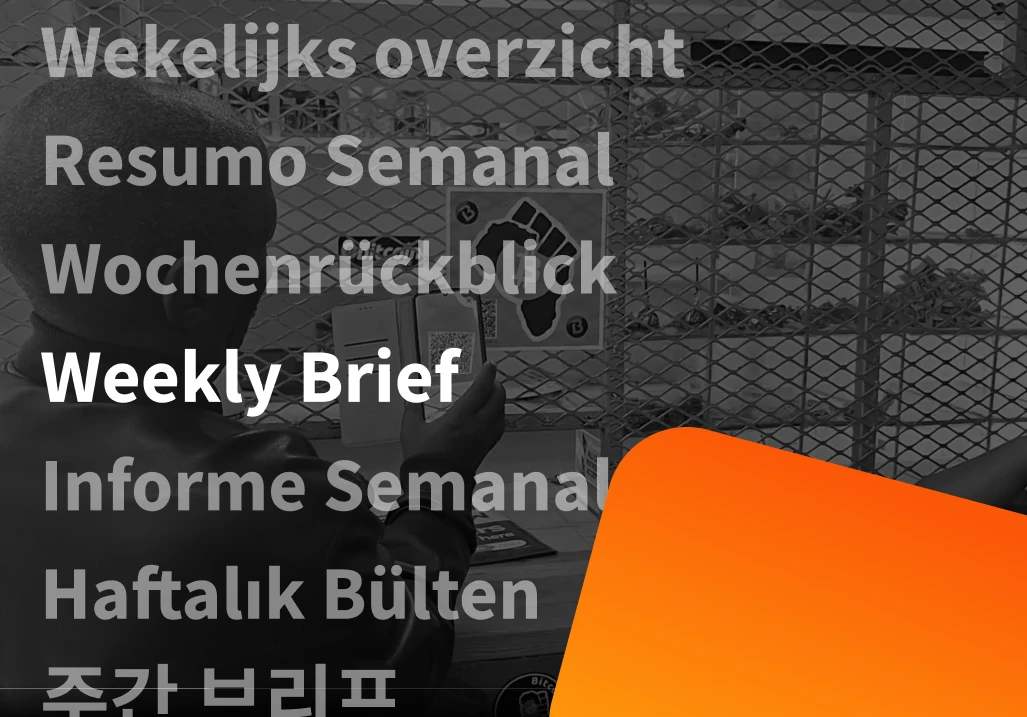
- BTCPay Server — redesigned merchant directory: BTCPay launched a redesigned directory at directory.btcpayserver.org, letting users find BTCPay merchants, apps, and organizations by category or country. They're also exploring BTC Map integration and calling for contributors to maintain listings and build a "BTCPay Accepted Here" sticker kit. Discovery is one of the oldest friction points for Bitcoin spending — productizing it matters.
- Numo and BTCPay integration (in development): A developer is building a BTCPay Server integration for Numo POS via the Greenfield API. The goal: multiple terminals connecting to a single BTCPay store with unified accounting, instead of separate balances per device. Multi-terminal POS with shared invoicing is table-stakes infrastructure for any physical merchant with more than one register.
- Dominican Republic — self-hosted BTCPay Server goes live: Bitcoindominicana now operates a self-hosted BTCPay Server for local merchants wanting to accept Bitcoin at the point of sale. They describe it as enabling real-time tracking of sats flow and reducing dependence on third-party processors. Following recent sovereign infrastructure work, the DR is now running its own merchant payment rails.
3) Circular Economy & Ground-Level Proofs
The strongest evidence that Bitcoin works as everyday money comes from the places building repeatable spend loops — not one-off announcements.
- Bolivia — Kerikito goes multi-tool: Kerikito in Bolivia now accepts Bitcoin using a full stack: Blink, Tiankii, BTCPay Server, Nuevedb, BTC Map, and Bitcoinize. A follow-up post documents a coffee purchase paid with Bitcoin at Kerikito. When you can name the tooling stack and show the receipt, you're past the announcement phase.
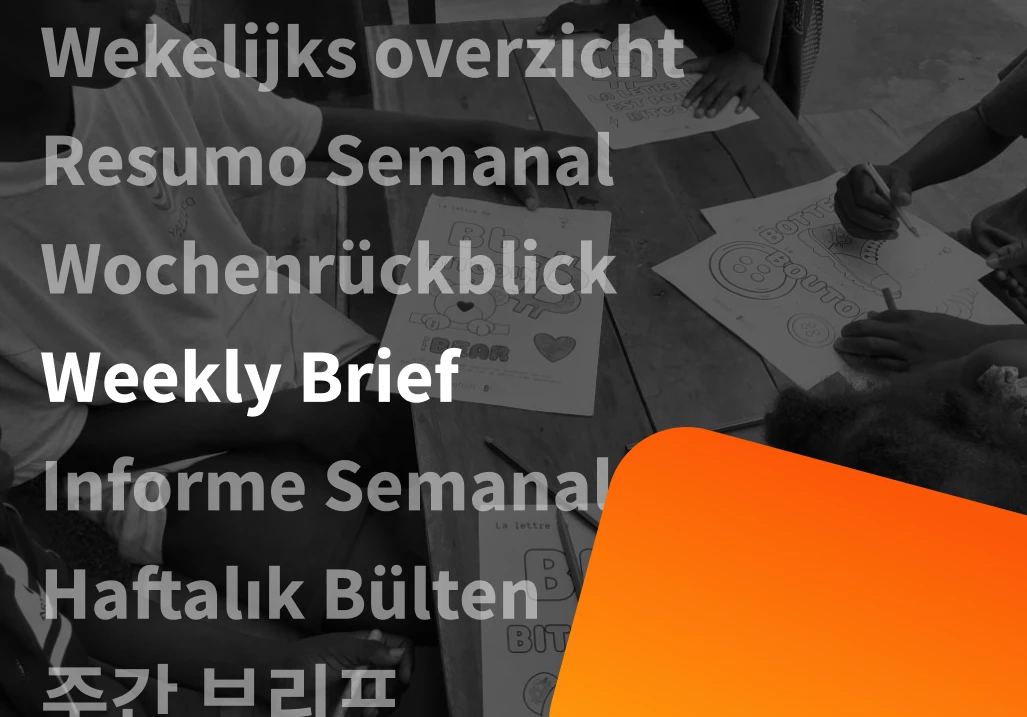
- Bitcoin Ekasi (South Africa) — "Learn. Earn. Spend. Repeat.": Kids at Bitcoin Ekasi are earning weekly sats for attending diploma classes, then spending them at local merchants using Bolt cards and Blink-powered Lightning addresses listed on BTC Map. This is a closed-loop earn-and-spend cycle running on real infrastructure — education funding the local economy, one week at a time.
- Blink + BTC Map merchant rails keep expanding: Across Zambia, Nigeria, Kenya, Uganda, and Ghana, new merchants continue surfacing with the same repeatable pattern: a Blink Lightning address plus a BTC Map listing. Categories this week include body lotion, barber services, provisions, nail salons, printing shops, and restaurants. The pattern is becoming a lightweight merchant launch kit — publish a paycode, get listed, start receiving.
The pattern this week: Lightning's reported $1 billion monthly volume gives the network a dollar-denominated benchmark, while the ground-level evidence — tap-to-pay tooling, tracked merchant growth in Bolivia, earn-and-spend loops in South Africa, and a steady stream of new Blink + BTC Map merchant endpoints — shows the spending infrastructure catching up to the throughput. The rails are getting faster, the tooling is getting simpler, and the merchant directories are getting deeper. See you next week.